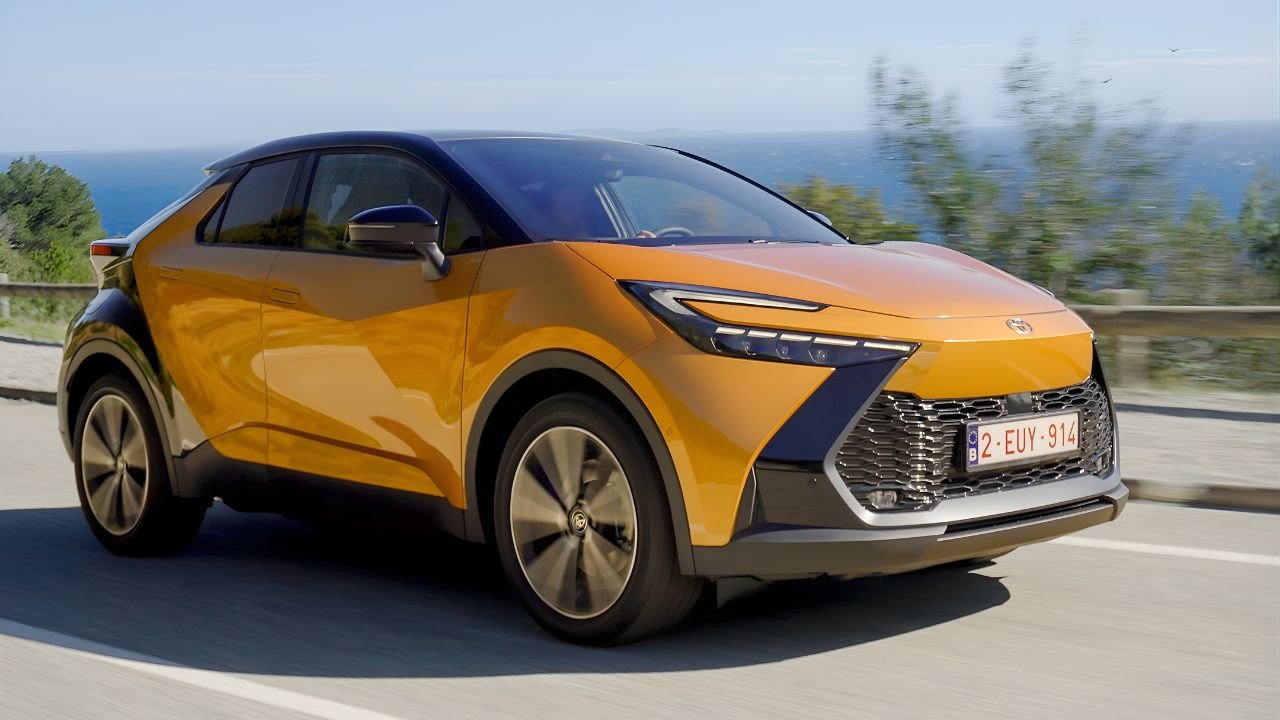

The automotive world has long recognized the Toyota C-HR as a rebel in a segment often defined by boxy practicality. Since its inception, the Coupe High-Rider (C-HR) has prioritized avant-garde styling and nimble urban handling over traditional cargo-hauling specs. As we move through 2026, Toyota has doubled down on this philosophy, evolving the C-HR into a sophisticated powerhouse of efficiency. No longer just a “bold face” in the crowd, the latest iteration introduces a fully electric powertrain alongside its proven hybrid foundations, aiming to capture the hearts of tech-savvy city dwellers and eco-conscious enthusiasts alike.
Cutting-Edge Performance and Powertrain Diversity
The most significant update for the 2026 model year is the triumphant return of the C-HR to North American shores as a dedicated Battery Electric Vehicle (BEV). This new flagship variant boasts a dual-motor All-Wheel Drive (AWD) setup that delivers a surprising 338 horsepower. This allows the compact SUV to sprint from 0 to 60 mph in a blistering 4.9 seconds, a figure previously reserved for dedicated sports cars. For those in European and Australian markets, the C-HR continues to offer its highly refined fifth-generation hybrid (HEV) and plug-in hybrid (PHEV) systems, providing a balanced blend of fuel economy and responsive driving dynamics.
2026 Toyota C-HR Key Specifications
| Feature | Hybrid (HEV) | Plug-in Hybrid (PHEV) | Battery Electric (BEV) |
| Powertrain | 1.8L or 2.0L Hybrid | 2.0L PHEV | Dual-Motor Electric |
| Horsepower | 140 – 196 hp | 223 hp | 338 hp |
| Drivetrain | FWD / AWD-i | FWD | Standard AWD |
| 0-60 MPH | ~7.9 – 9.9 sec | ~7.4 sec | 4.9 sec |
| Electric Range | N/A | Up to 41 miles | ~287 – 290 miles |
| Cargo Space | 388 Liters | 310 Liters | 25.4 cu. ft. |
A Futuristic Interior Crafted for the Digital Age
Step inside, and you are greeted by a cabin that feels more “cockpit” than “commuter.” Toyota has moved away from the cluttered layouts of the past, opting for a driver-centric design that utilizes premium, sustainable materials. A massive 14-inch Toyota Audio Multimedia touchscreen takes center stage, offering crisp resolution and seamless wireless integration for Apple CarPlay and Android Auto. The use of recycled fabrics, particularly in the updated Mid+ and GR SPORT grades, demonstrates a commitment to “eco-luxury.” While the sloping roofline still limits rear-seat headroom for taller passengers, the front row remains a spacious, tech-heavy sanctuary equipped with ambient lighting that changes based on the time of day.
Design Evolution: The “Hammerhead” Aesthetic
Visually, the 2026 C-HR looks like a concept car that accidentally escaped the design studio and hit the production line. The front end adopts the “hammerhead” signature seen on the latest Prius and bZ4X, featuring interlocking shapes and sharp LED lighting signatures. To improve aerodynamics and aesthetics, Toyota has integrated flush-fitting door handles and removed the rear wiper, relying on a specially angled rear window to shed water. The available 20-inch alloy wheels and striking “bi-tone+” paint schemes—which extend the black roof color all the way to the rear of the car—ensure that it remains one of the most photogenic vehicles in the compact crossover segment.
Safety and Advanced Driver Assistance
Safety remains a non-negotiable pillar for Toyota, and the 2026 C-HR comes standard with the most advanced suite of technologies yet: Toyota Safety Sense 3.0. This system includes Proactive Driving Assist, which provides gentle braking into curves, and a new Driver Monitor Camera that can detect signs of fatigue or distraction. If the driver becomes unresponsive, the Emergency Driving Stop System can safely bring the vehicle to a halt. Furthermore, the car features a “Safe Exit Assist” system, preventing doors from opening if a cyclist or vehicle is approaching from behind, a crucial feature for busy urban environments.
Range, Charging, and Efficiency
For the new BEV model, range anxiety is mitigated by a 74.7 kWh lithium-ion battery providing nearly 290 miles of driving range on a full charge. The inclusion of a North American Charging System (NACS) port means owners have access to a massive network of fast chargers. On a Level 3 DC fast charger, the C-HR can replenish from 10% to 80% in approximately 30 minutes. The hybrid variants are equally impressive, with the 1.8L HEV achieving fuel economy figures as low as 4.0L/100km, making it one of the most cost-effective vehicles to operate in its class over the long term.
Final Verdict: The Urban Specialist
The 2026 Toyota C-HR is a masterclass in niche marketing. It doesn’t try to be a family hauler or a rugged off-roader; instead, it excels as a stylish, high-tech, and incredibly efficient urban companion. With the addition of the high-performance electric variant, Toyota has transformed the C-HR from a stylish underpowered crossover into a legitimate performance threat in the EV space. If you value design, cutting-edge safety, and the latest in green technology over maximum trunk volume, the new C-HR is arguably the most compelling choice in the current Toyota lineup.
FAQs
Q1 Is the 2026 Toyota C-HR available in the USA?
Yes, the C-HR has returned to the U.S. market for the 2026 model year specifically as a fully electric vehicle (BEV) with standard All-Wheel Drive.
Q2 How long does it take to charge the electric C-HR?
Using a DC fast charger, the 2026 C-HR can charge from 10% to 80% in about 30 minutes. A full charge at home using a Level 2 (240V) outlet takes approximately 7 hours.
Q3 What is the cargo capacity of the new C-HR?
The electric model offers roughly 25.4 cubic feet of space behind the rear seats, while the hybrid versions offer between 310 and 388 liters depending on the battery configuration.
Disclaimer:
The content is intended for informational purposes only. You can check the official sources; our aim is to provide accurate information to all users.