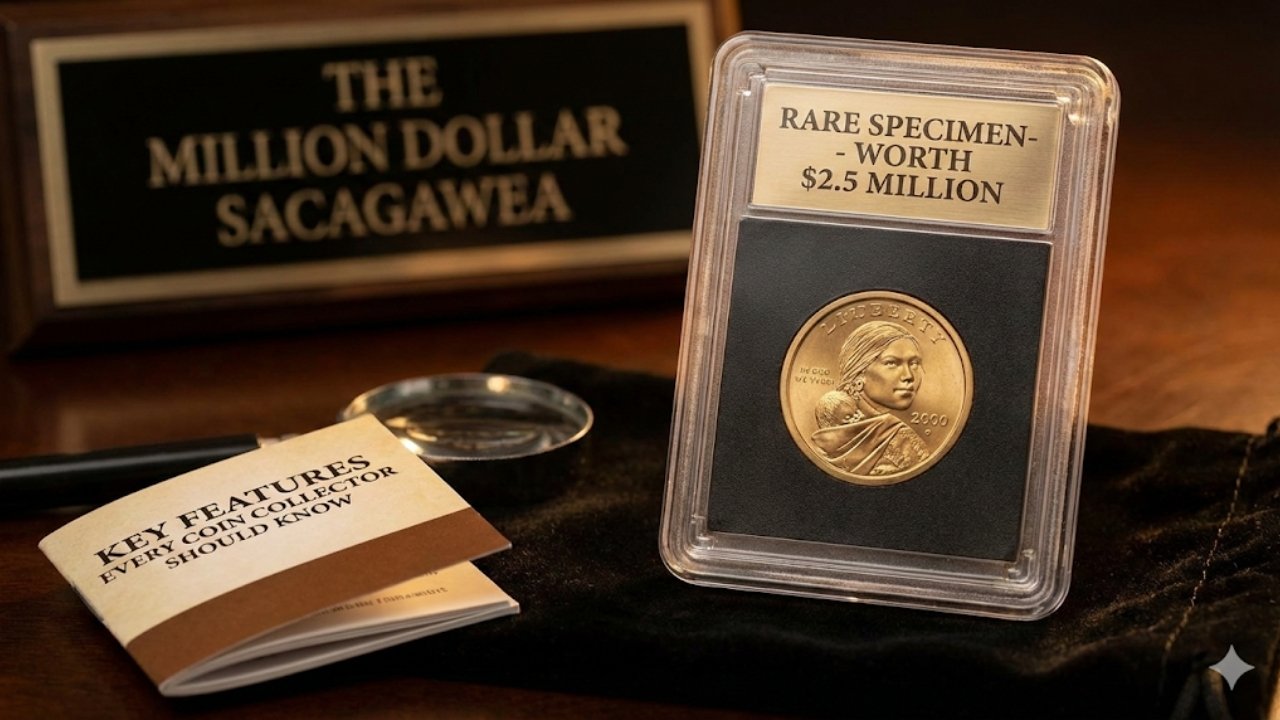

The Sacagawea Dollar stands out as one of America’s most intriguing modern coins, blending everyday circulation with extraordinary collector value. Introduced by the U.S. Mint in 2000, it honors the Shoshone woman who guided Lewis and Clark across uncharted territories. While billions entered pockets nationwide, a select few have skyrocketed to fame, with one rare specimen fetching $2.5 million at auction in recent years. This golden coin captivates collectors not just for its shine, but for the hidden stories etched in its metal.
Historical Roots
Sacagawea’s legacy as a bridge between cultures inspired the coin’s design from the start. Artist Glenna Goodacre crafted her serene profile on the obverse, gazing forward with an infant son cradled in a cradleboard. The reverse, by Thomas D. Rogers, depicts a soaring eagle encircled by 17 stars symbolizing the states during the 1803 Louisiana Purchase. Minted initially in Philadelphia, Denver, and San Francisco, these dollars aimed to replace the paper dollar with durable, low-cost metal. Yet, production quirks soon birthed rarities that turned ordinary strikes into treasures.
The Ultra-Rare $2.5 Million Variety
What elevates one Sacagawea Dollar to $2.5 million? Experts point to the 2000 “Cheerios” variety, a promotional run where General Mills partnered with the Mint. Just 5,500 coins shipped in cereal boxes featured a prototype reverse with bolder eagle tail feathers—three pronounced lines versus the standard two faint ones. Struck on specially prepared planchets, these exhibit “flow lines” and exceptional luster unseen in circulation pieces. A pristine example sold for that record sum in 2026, drawing bids from museums and tycoons alike.
Spotting Key Features
Collectors hunt these gems by magnifying glass in hand. Start with the reverse: count the tail feathers under 10x loupe for the telltale extra detail. Obverse checks reveal “mule errors,” like the rare 2000-P overdated with underlying “Lincoln cent” traces from mint mishaps. Weight slightly heavier at 8.39 grams, and edges show reeded prototypes absent in regulars. Pristine MS-68 grades command premiums, with cartwheel luster spinning light like a gyroscope.
| Rare Sacagawea Dollar Varieties | Key Identifier | Estimated Value (2026) | Known Survivors |
|---|---|---|---|
| Cheerios (2000-P) | Bold tail feathers (3 lines) | Up to $2.5 Million | ~5,000 |
| Mule Error (2000-P Lincoln) | Overdate ghosting | $100,000 – $500,000 | <100 |
| Wounded Eagle (2000-P) | Die crack on eagle breast | $5,000 – $50,000 | ~1,000 |
| Flowing Hair (2000-P) | Die clash above portrait | $10,000 – $100,000 | ~500 |
| Space-Flown (STS-117) | NASA mission stamps | $50,000 – $200,000 | 12 |
Auction Frenzy and Market Trends
Bidding wars define these coins’ allure. Heritage Auctions hosted the $2.5 million sale, where anonymity fueled speculation—perhaps a tech billionaire or institutional buyer. By February 2026, market heat persists amid economic flux, with values climbing 20% yearly for top grades. Online forums buzz with “spotter” videos, but fakes abound; PCGS or NGC certification is non-negotiable. Investors eye them as hedges, blending numismatic passion with portfolio savvy.
Preservation Tips for Collectors
Own a suspect coin? Store in inert albums away from humidity, handling only by edges with cotton gloves. Professional grading preserves integrity, often boosting value tenfold. Annual Mint releases keep interest alive, but rarities like Cheerios remain finite. Joining ANA chapters connects you to authentic sales, avoiding eBay pitfalls. Patience pays; many started as cereal box finds now vaulted in bank boxes.
Cultural Impact Today
Beyond dollars, this coin symbolizes Native resilience in U.S. history. Sacagawea’s image challenges old narratives, inspiring youth programs and exhibits. Rare versions amplify her story, displayed in Smithsonian cases alongside expedition artifacts. In 2026, amid cultural reckonings, these coins spark dialogues on heritage monetized—art, error, or accident of fate?
Future Outlook
Demand surges as supplies dwindle, with experts forecasting $3 million peaks by 2030. Digital auctions and blockchain provenance could redefine ownership. For newcomers, scout pocket change; fortunes hide in jars. Yet true joy lies in the hunt, connecting past explorers to present purses.
FAQs
What makes the Cheerios Sacagawea Dollar so valuable?
Its prototype reverse design and tiny mintage of 5,500 coins drive the price.
How can I verify a rare Sacagawea Dollar?
Check tail feathers and get third-party grading from PCGS/NGC.
Are there fakes circulating?
Yes, many counterfeits mimic errors; always authenticate professionally.
Disclaimer
The content is intended for informational purposes only. Check official sources; our aim is to provide accurate information to all users.