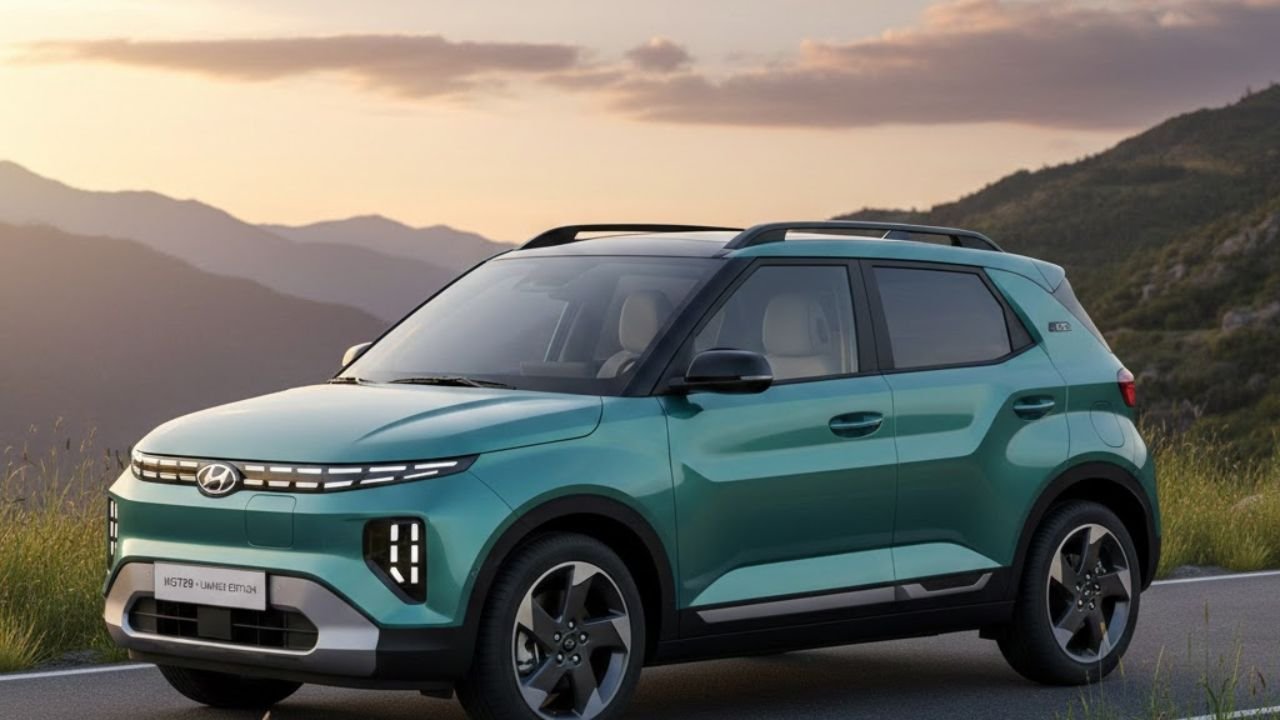

The Hyundai Inster has officially stepped into the limelight as the brand’s most compact and affordable electric SUV. Based on the design philosophy of the Korea-exclusive Casper, the Inster is a sub-compact powerhouse designed to tackle the unique challenges of urban mobility. By merging a rugged “tallboy” SUV aesthetic with a zero-emission powertrain, Hyundai aims to set a new benchmark for city commuters. This micro-SUV is not just a shrunk-down version of its larger siblings but a purpose-built electric vehicle that emphasizes clever space management and futuristic design elements, such as the signature Parametric Pixel lighting found on the Ioniq series.
Expected Launch Date and Market Positioning
The global rollout of the Hyundai Inster began in late 2024, starting with its home market in South Korea. For the Indian market and other parts of Asia Pacific, the launch is highly anticipated for mid-2026. Industry experts suggest that the Inster might even be rebranded or positioned similarly to an “Exter EV” in specific regions to capitalize on existing brand familiarity. In terms of pricing, it is expected to sit in a competitive bracket, likely ranging between ₹10 lakh to ₹15 lakh (ex-showroom), positioning it as a direct rival to the Tata Punch EV and the MG Comet. This strategic pricing makes it an attractive entry point for first-time EV buyers looking for a trusted global badge.
Battery Capacity and Driving Range
Hyundai offers the Inster with two distinct battery configurations to suit different driving needs. The Standard Range model comes equipped with a 42 kWh battery pack, while the Long Range variant boasts a 49 kWh unit. Under the WLTP (Worldwide Harmonised Light Vehicles Test Procedure) cycle, the 49 kWh version delivers a segment-leading range of up to 360 km on a single charge. For those focused on city runs, the 42 kWh variant still provides a respectable 300 km to 327 km range. These figures are bolstered by a high-efficiency heat pump and a battery heating system that come as standard, ensuring consistent performance even in colder climates where EV efficiency typically takes a hit.
Technical Specifications Overview
| Feature | Standard Range | Long Range |
| Battery Capacity | 42 kWh | 49 kWh |
| WLTP Range | Up to 327 km | Up to 360 km |
| Max Power | 71.1 kW (97 PS) | 84.5 kW (115 PS) |
| Peak Torque | 147 Nm | 147 Nm |
| 0-100 km/h | 11.7 Seconds | 10.6 Seconds |
| Fast Charging | 10-80% in 30 mins | 10-80% in 30 mins |
| Top Speed | 140 km/h | 150 km/h |
Interior Comfort and Versatility
Despite its compact exterior dimensions, the interior of the Hyundai Inster is a masterclass in space optimization. The cabin features a flat floor, which allows for a “walk-through” design in the front row, creating a sense of openness rarely seen in this segment. One of its standout features is the extreme flexibility of the seating; all four seats, including the driver’s seat, can be folded completely flat. This transforms the car into a mobile lounge or a massive cargo hauler with up to 1,059 liters of space when the rear seats are down. Additionally, the rear bench can slide forward by 16 cm, allowing users to choose between extra legroom or a larger 351-liter boot.
Advanced Infotainment and Connectivity
The dashboard of the Inster is dominated by a dual-screen setup, featuring a 10.25-inch digital instrument cluster and a matching 10.25-inch infotainment touchscreen. This system supports Apple CarPlay and Android Auto via wired connections and includes Hyundai’s Bluelink connected car services. Drivers can enjoy premium touches like 64-color LED ambient lighting, a wireless charging dock with a cooling function, and a one-touch sunroof. The steering wheel also incorporates interactive pixel lights, similar to those found in the award-winning Ioniq 5, which provide visual feedback for various vehicle functions and charging status.
Performance and Charging Capabilities
Performance in the Inster is zippy and tailored for city traffic. The Long Range motor produces 115 PS of power, allowing for an effortless 0-100 km/h sprint in just 10.6 seconds. When it comes to charging, the Inster supports 120 kW DC fast charging, which can juice the battery from 10% to 80% in approximately 30 minutes—roughly the time it takes to grab a coffee. For home charging, an 11 kW on-board charger is standard. A unique highlight is the Vehicle-to-Load (V2L) functionality, which allows the car to act as a giant power bank, capable of powering external devices like laptops, e-scooters, or camping equipment through internal and external sockets.
Safety and Driver Assistance Systems
Safety remains a top priority for Hyundai, and the Inster is packed with a comprehensive suite of Advanced Driver Assistance Systems (ADAS). This includes Forward Collision-Avoidance Assist, Lane Keeping Assist, Blind-Spot Collision-Avoidance, and Smart Cruise Control with Stop & Go. To make urban parking easier, the vehicle offers a 360-degree Surround View Monitor and Parking Collision-Avoidance Assist. With seven standard airbags, including a front-center airbag to prevent passengers from colliding with each other during an impact, the Inster is designed to provide peace of mind in every driving scenario.
FAQs
Q1. What is the real-world range of the Hyundai Inster?
While the WLTP range is up to 360 km for the Long Range model, real-world city driving is expected to yield approximately 300 km to 315 km, depending on driving style and weather conditions.
Q2. Does the Hyundai Inster support fast charging?
Yes, it supports DC fast charging up to 120 kW, enabling a 10% to 80% charge in about 30 minutes. It also features an 11 kW AC on-board charger for home use.
Q3. Is the Hyundai Inster suitable for families?
It is a 4-seater micro-SUV. While it is compact, its sliding and reclining rear seats make it highly versatile for small families, offering impressive legroom and cargo flexibility.
Disclaimer
The content is intended for informational purposes only. you can check the officially sources our aim is to provide accurate information to all users