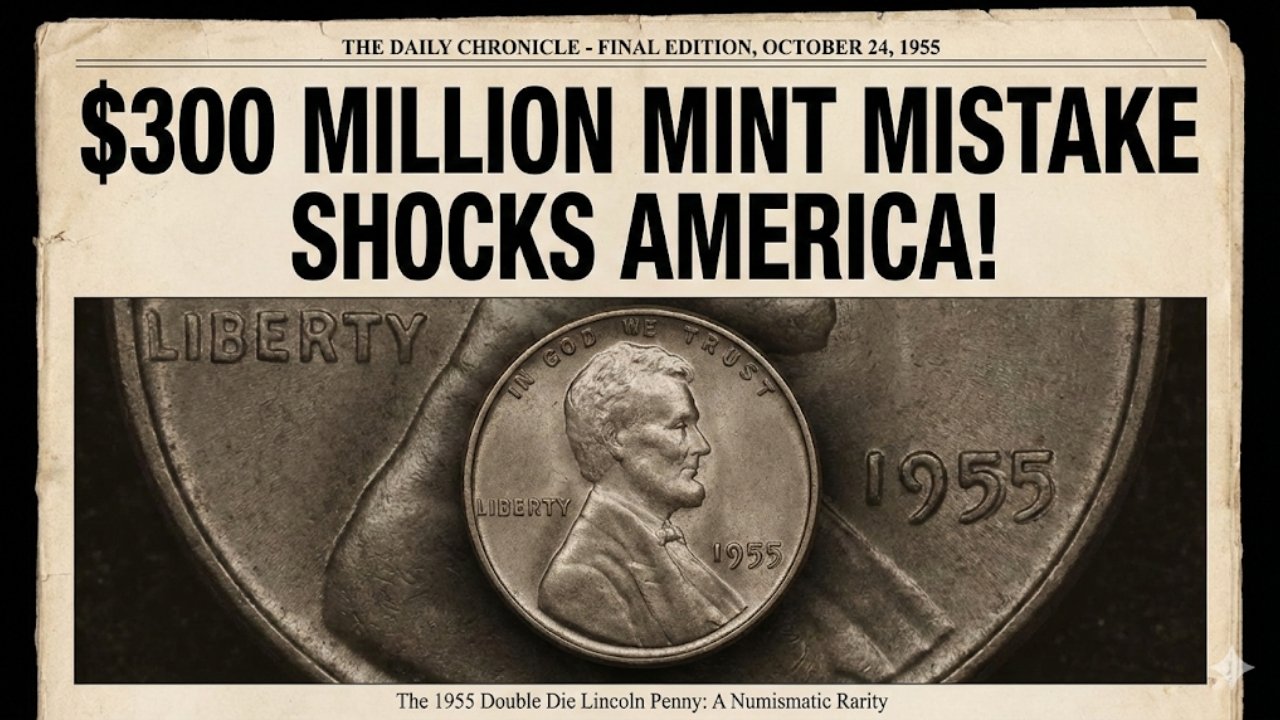

In 1955, America faced a nationwide penny shortage that pushed the Philadelphia Mint to ramp up production around the clock. Workers on the night shift accidentally used a flawed die, creating a batch of Lincoln cents with boldly doubled lettering and dates. This rare error turned everyday pocket change into treasures worth millions, captivating collectors for decades.
The Night Shift Chaos
Late in 1955, demand for pennies surged due to vending machines and everyday transactions, forcing the Mint into 24-hour operations with two 12-hour shifts. During hubbing—when designs transfer to dies—a misalignment doubled the obverse elements like “LIBERTY,” “IN GOD WE TRUST,” and “1955.” Up to seven inspectors usually checked dies, but this one slipped through on the midnight run, producing 20,000 to 40,000 error coins mixed with normal ones.
Decision to Release
Chief Coiner Sydney C. Engel faced a dilemma: recall millions of cents including the errors, or let them circulate. Melting down 10 million pennies proved too costly, so he approved release. These coins soon appeared in circulation, especially in cigarette packs from vending machines that gave two pennies as 23-cent change for quarters. By morning, the errors were out in Boston, Massachusetts, and New York, sparking buzz among finders.
Discovery and Early Buzz
Ordinary folks spotted the dramatic doubling—far thicker than minor machine errors—turning change jars into hunts. The error’s obverse-only doubling made it unmistakable: letters appeared thick and split, unlike reversed designs on reverses. Word spread fast through newspapers and coin clubs, drawing crowds to banks. Within months, savvy collectors hoarded them, sensing history in the making.
| Grade (MS Scale) | Estimated Survivors | Auction Value Range (USD) |
|---|---|---|
| MS-60 to MS-63 | ~1,200 | $1,500 – $5,000 |
| MS-64 to MS-65 | ~300 | $10,000 – $50,000 |
| MS-66+ | <100 | $100,000 – $300,000+ |
| Total Minted | 20,000-40,000 | N/A |
This table shows rarity by condition; high-grade survivors drive the coin’s immense value today.
Rise to Numismatic Fame
By the 1960s, the 1955 Double Die became the holy grail of error coins, outshining others like the 1943 bronze cent. Its bold aesthetics and backstory fueled demand. Auctions shattered records: a MS-67 sold for $1.3 million in 2008, fueling myths of a $300 million total valuation if all existed. Media dubbed it America’s shocking mint mistake, blending human error with fortune.
Modern Value Surge
Today, fewer than 2,000 high-grade examples remain from the original run, ravaged by circulation wear. Top sales hit $300,000+, with PCGS and NGC slabs boosting authenticity. The coin symbolizes minting vulnerability in pre-automated eras. Collectors prize its untouched “red” luster over toned pieces, making uncirculated finds life-changing windfalls.
Legacy of a Flawed Penny
The Double Die saga highlights how one oversight amid crisis birthed legend, teaching mints about quality control. It ignited error coin collecting, proving rarity trumps perfection. From night-shift blunder to millionaire-maker, this penny reminds us fortune favors the observant.
FAQs
What causes the doubling?
A hubbing misalignment doubled the obverse die design.
How many were made?
Estimates range 20,000-40,000 before detection.
Where to spot one?
Check date and lettering thickness; fakes abound.
Disclaimer
The content is intended for informational purposes only. Check official sources; our aim is to provide accurate information to all users.