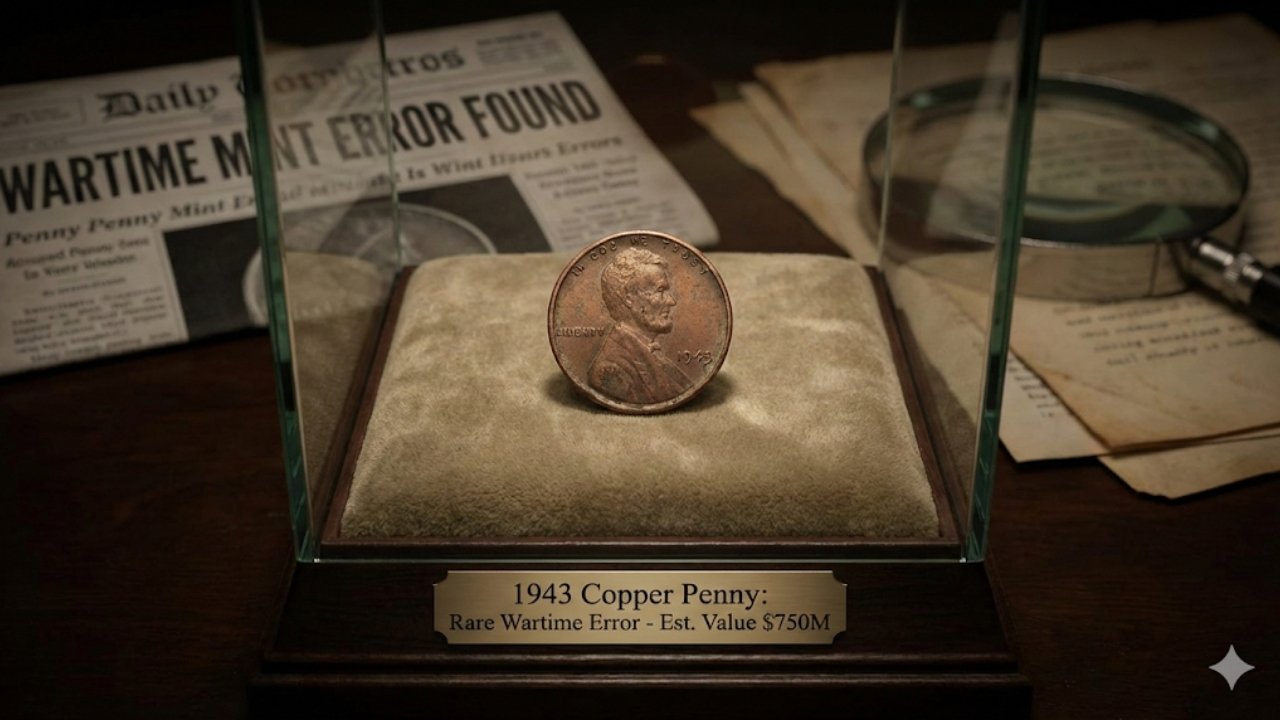

The 1943 Copper Penny stands out as one of the most captivating rarities in American numismatics, born from the chaos of World War II. Amid global conflict, the U.S. Mint shifted penny production to steel to save copper for bullets and shells, but a handful of these coins slipped through on leftover copper blanks. This fluke turned everyday pocket change into potential treasures, sparking endless hunts among collectors even today.
Wartime Origins
In 1942, as war raged, copper became a critical resource for ammunition and wiring. The Mint halted bronze penny production, melting down planchets and switching to zinc-coated steel for 1943. Workers at Philadelphia, Denver, and San Francisco mints churned out over a billion steel “wheat pennies,” each weighing less and showing a silvery sheen. Yet, a few 1942 copper blanks lingered in machines, leading to accidental strikes dated 1943—fewer than 20 verified examples across all mints.
Path to Discovery
These errors stayed hidden for years, blending into circulation. The first surfaced in the late 1940s when a Tennessee boy found one in change, igniting media frenzy. More turned up sporadically, often from old jars or estate sales. Collectors pored over attics and piggy banks, fueled by tales of instant wealth. By the 1950s, experts confirmed their legitimacy through weight (3.11 grams vs. steel’s 2.7) and non-magnetic properties, cementing their status as holy grails.
Auction Milestones
Values skyrocketed with publicity. A 1943-D sold for $14,100 in 1973, but prices exploded later. In 2010, a Philadelphia specimen fetched $1.7 million at Heritage Auctions, setting records. Another hit $1.05 million in 2021. Even worn pieces command six figures, with pristine MS-65 grades pushing toward $2 million. These sales highlight not just rarity but the coin’s allure as a wartime artifact.
Spotting the Real Deal
| Feature | 1943 Steel Penny | 1943 Copper Penny |
|---|---|---|
| Material | Zinc-coated steel | 95% copper, 5% tin/zinc |
| Weight | 2.7 grams | 3.11 grams |
| Magnet Test | Sticks strongly | Does not stick |
| Color | Silvery gray | Reddish brown |
| Edge | Smooth, possible zinc whitening | Solid copper tone |
| Known Survivors | Billions | Fewer than 20 |
Amateurs test with magnets first—if it doesn’t cling, scrutinize further. Fakes abound, often steel coins copper-plated post-mint. Pros use scales, X-rays, and die-match analysis from services like PCGS or NGC. Genuine ones show subtle strike differences from rushed wartime presses.
Modern Collector Frenzy
Today, every 1943 penny in a jar prompts double-checks, with apps and forums buzzing over suspects. Rumors persist of undiscovered coins, though experts doubt more than a dozen exist outside slabs. Values hold firm despite market swings, buoyed by institutional demand—Smithsonian and ANA museums showcase specimens. For hobbyists, owning one symbolizes beating astronomical odds, blending history with high stakes.
Beyond the Price Tag
This penny transcends money, embodying sacrifice and human error in crisis. It recalls rationing, victory gardens, and factory shifts, a tiny rebel against total war mobilization. Unlike mass-produced steelies, its imperfection humanizes the Mint’s precision. New generations discover it via YouTube hunts or family lore, keeping the legend alive into 2026.
Future Outlook
As fewer change hands privately, expect values to climb, possibly hitting $2-3 million for top grades. Digital auctions and blockchain grading could boost accessibility, but counterfeits challenge newcomers. Savvy hunters focus on estate lots over face value rolls. Whether tucked in grandma’s drawer or a vault, the 1943 Copper Penny proves some errors endure as eternal wins.
FAQs
How many 1943 Copper Pennies exist? Fewer than 20 certified across all mints.
What’s the top sale price? $1.7 million in 2010.
How do I verify one? Magnet test, weigh it, then get PCGS/NGC grading.
Disclaimer
The content is intended for informational purposes only. Check official sources; our aim is to provide accurate information to all users.